



Rate this:
Tags: Art, Black and white photography, Matthew Stone, Matthew Stone photography, Nudes, Photography
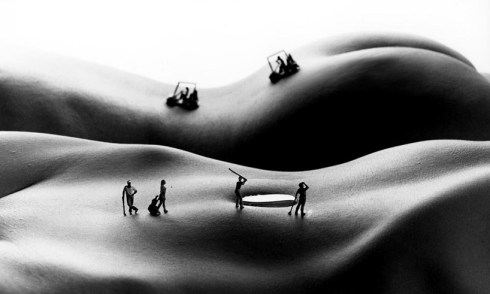
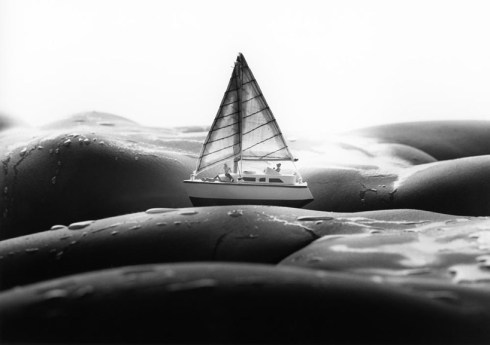
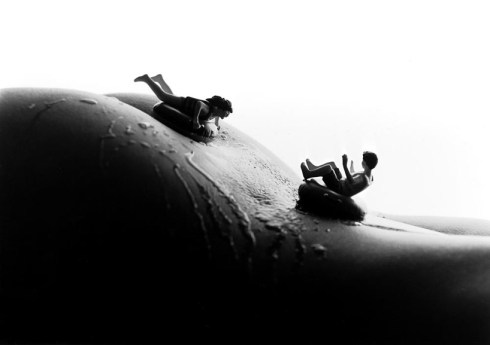
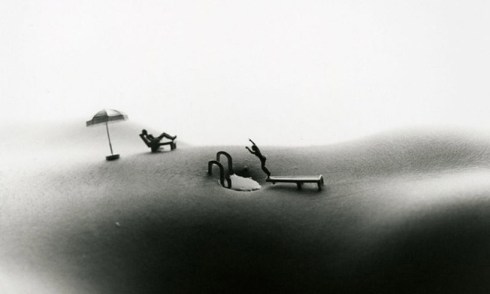
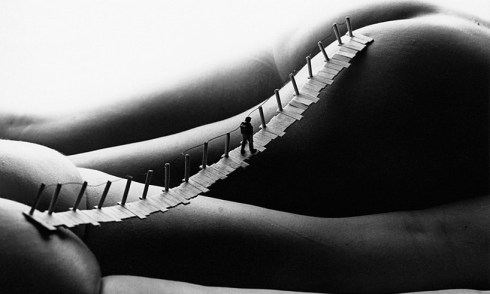
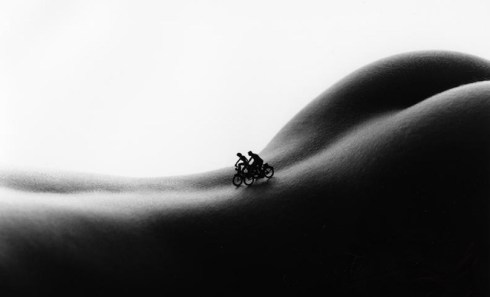
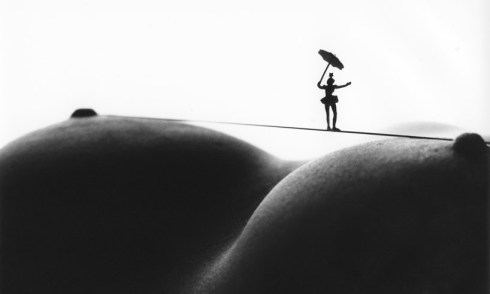
Self-taught american photographer allan teger has sent designboom new images from his body of work ‘bodyscapes®’, with a series of black and white photographs depicting miniature scenes on the nude body mimicking various landscapes. the images are not double exposures and uses no digital manipulation, only small scale figures arranged on the naked form to illustrate predominantly outdoor activities, where a belly-button may act as a lake or a sculpted derrière as a mountain.
“Teger was initially trained as a psychologist, with the bodyscapes® concept evolving from his teaching as an academic counselor. Teger would lecture readings on tao te ching, the bhagavad-gita, books by ram Dass, carl rogers, huxley, watts and others. The notions of altered realities, subjective reality, and mystical consciousness became part of his artistic understanding.
Teger describes the development of his work:
‘I remember the moment that the idea for bodyscapes® came to me. I was thinking that the shape and structure of the universe repeated itself at every level and suddenly I had the image in my mind of a skier going down a breast. this was it – the universe repeating its shapes – a body looking like a mountain. it was also an example of two realities coexisting. the picture could be seen as a landscape and it could also be seen as a body. Although they were different, both perceptions were right at the same time. I knew instantly that I had an entire series of images waiting to be captured on film.”
The ongoing project started in 1976, with the set updated regularly to this day, most are shot with a medium format mamiya RB67 and either tri-X or t-max film. The regular edition bodyscapes® are printed on ilford multigrade paper, and the collector’s edition is printed on agfa classic 118 fiber paper. Teger also has a book of the pieces due out in september from schiffer publishing.






SOURCE:
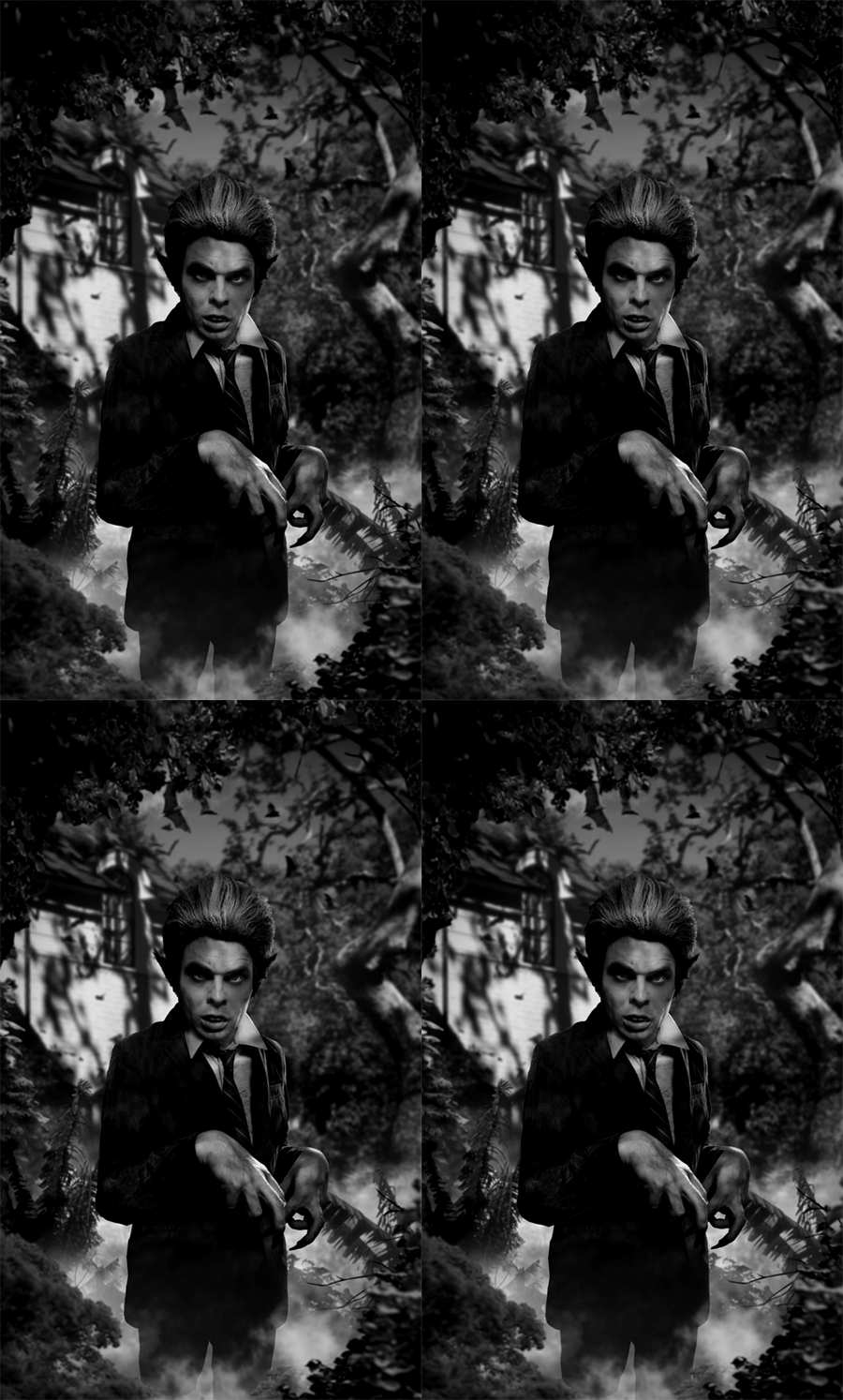
“Brooklyn-based studio the Saline Project have diverted their talent for creating music videos, and applied it to GIF art in their image series entitled ‘monsters, villains, heroes and victims’ (MVHV). brothers adam and ben toht along with jesse roff and Liam Kirtley make up the collective who will showcase up to thirteen pieces, all of which broaden the traditional computerized GIF art-form from a basic animated visual to one that also illustrates depth and volume.
This technique has been dubbed ‘3D lenticular imagery’ and was achieved through photographing the scenes in a studio, and then reproduced into a type of photo collage, cut up in a particular way to give the illusion of dimension.
The team, who have in the past created music videos for the likes of modest mouse and the cure describe the serendipitous process behind the concept:
‘We do a lot of fooling around and experimentation, and MVHV came out of one of those experiments, really it’s a mash-up of a bunch of things that we love dearly. we’ve always been drawn to dark, iconic characters and the look and feel of film noir.’ The remainder of the images are aimed to be released coinciding with halloween, given the spooky subjects, with a show in new york, then published online from which they will make an ‘art app’, so viewers can see them on phones and ipads”.


SOURCE:
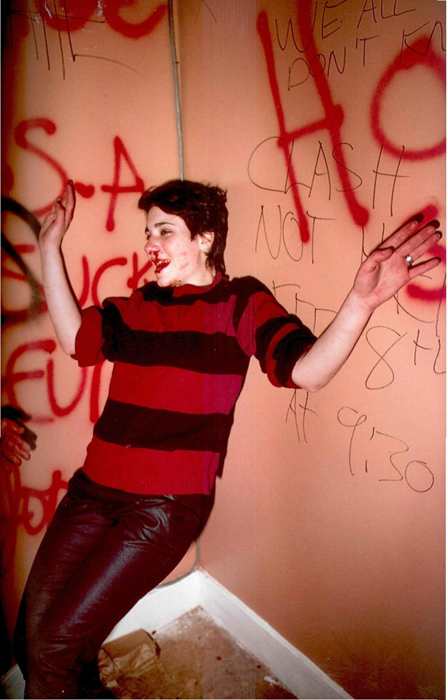
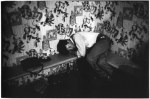
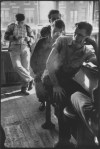
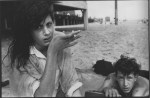
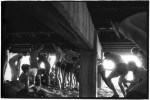
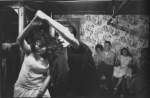
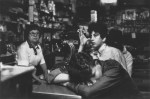
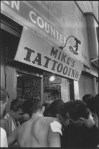
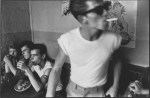
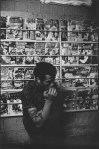
Images by Jim Jocoy from We’re Desperate: The Punk Rock Photography of Jim Jocoy, SF/LA 1978-1980
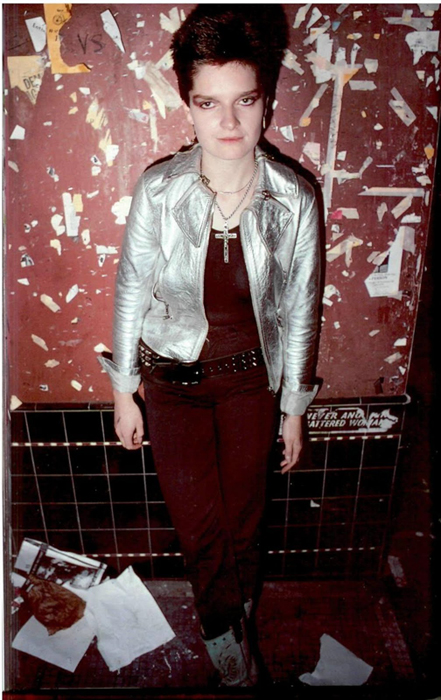

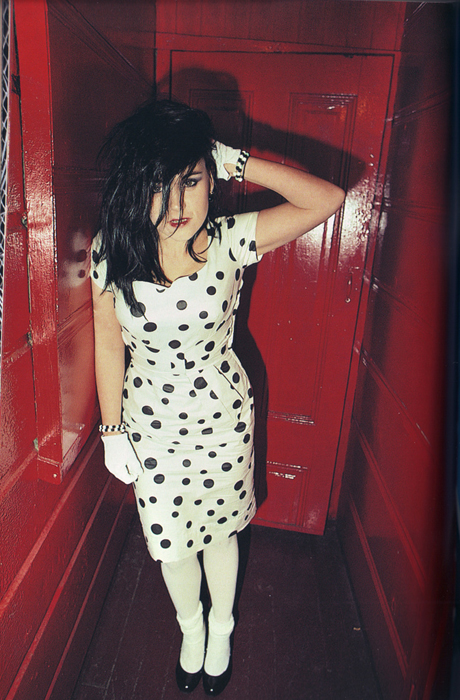


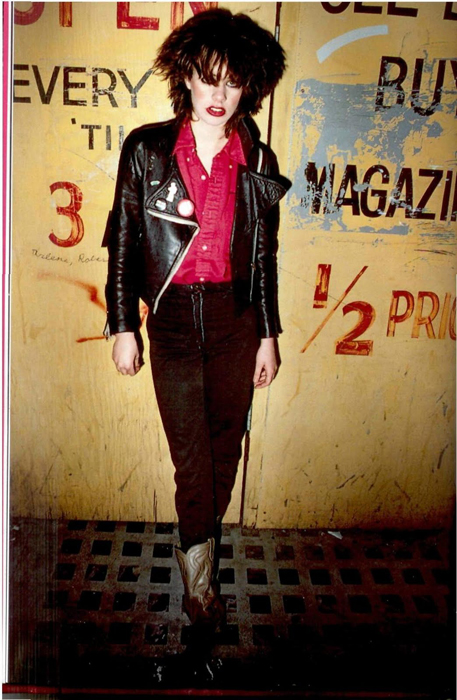
Source:
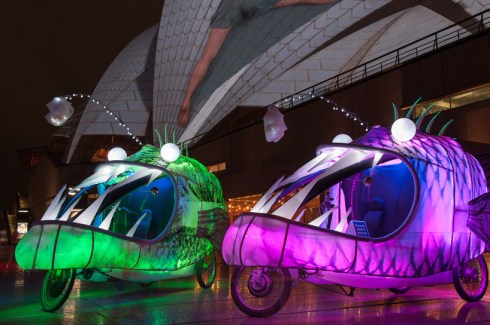
During the annual VIVID sydney light event, group d collective, an australian multidisciplinary studio, built multiple illuminated ‘Angler fish’ to take part in the festival. the glowing structures are in fact bicycles that were able to be ridden around the city, creating a colorful aquatic spectacle to adorn the grey urban landscape. The three deep-sea creatures were fabricated with custom frames that then had digitally-printed lycra and chiffon skins pulled tightly over. The radiant purple, blue and green tones coordinated well with the theme of the vibrant carnival, bringing a marine glow to its audience.
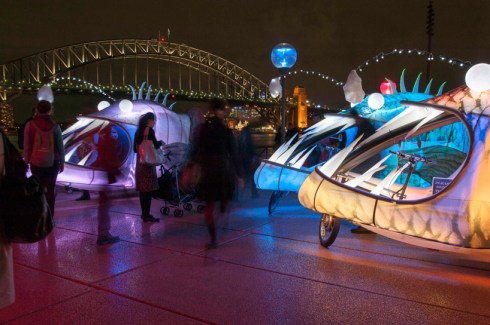


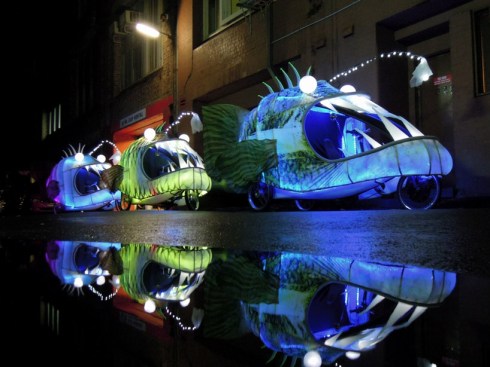
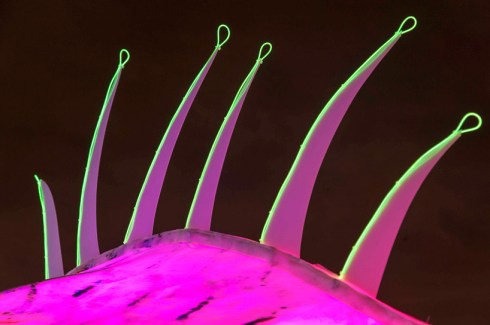
SOURCE:

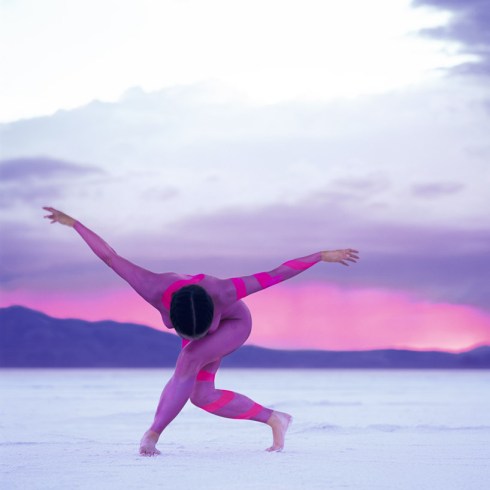
“California-based photographer Jean-Paul Bourdier has sent designboom images of his collection of photographs entitled ‘bodyscapes’, of which he is gathering funding for a book of 240 works titled ‘leap into the blue’ in a kickstarter campaign you can find here. Bourdier concentrates on the beauty and geometry of the human body, combining landscape and flesh as a canvas to create a visual union, with all of the images having been shot on site in analog photography, without the use of digital manipulation. He explains his understanding, motivation and expression of the human form behind his compositions:
‘Arising in each visual event conceived are the geometries generated by the body as a determinant of ‘negative space’— not the background of the figure and the field surrounding it, but the space that makes composition and framing possible in photography. As an organizer of space, the body also serves as a primary measuring unit, by which one perceives and constructs one’s environment.
such an approach can be linked to the practices of literally using the body as a first unit of measurement, which were not only common to the building of vernacular architecture around the world but were also at work in the temples of India, Egypt and Greece, for example.’
Intersecting many disciplines – photography, sculpture, performance, dance, land art, body art, design and acrobatics – the artist creates and choreographs each vibrant piece with a strong philosophy directing each scene, using the medium of photography, known to capture the ‘real’, to achieve the seemingly impossible, with thoughtful and surreal outcomes:
‘In working with the bare and painted body, I am also working with the demands and challenges of a body-mind state that I call ‘not two—many twos’. For example, without clothes the body regains its undivided primary nature, being intricately part of the forces of the universe. One and many. the visual works I come up with are thus a continual experiment of how we physically, rhythmically relate to this universe from the specific, intimate bodyhouse.’
‘Rather than being a mere recording of an encounter between event and photographer, the photograph is an event of its own: long prepared, and yet full of unexpected moments; a still manifestation of an encounter between desert light, body light and camera eye.’ The ‘bodyscapes’ project, to now be documented in a publication, establishes a clear and unadulterated reverence to something shared by all, creating corporeal experiences that extend beyond to that of the natural cosmos and defining the sometimes forgotten innate relationship with the two.



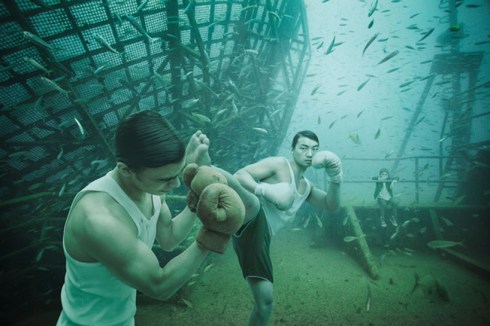
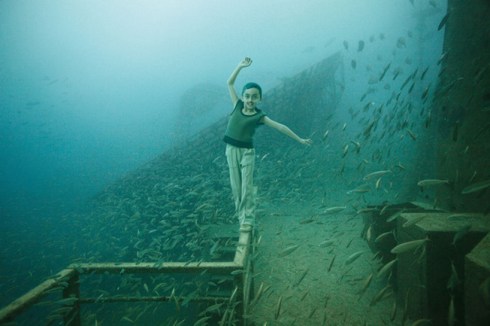
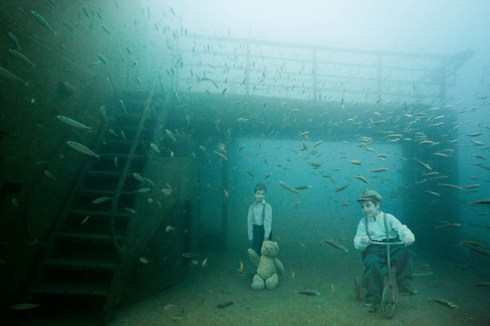
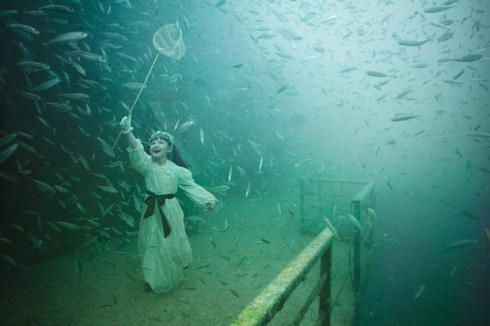
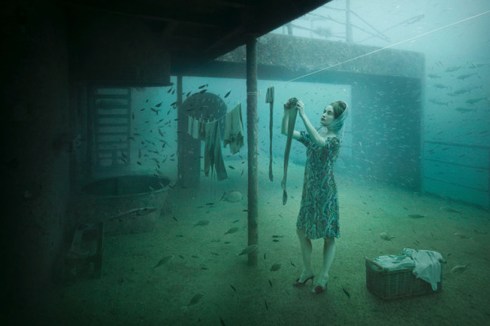
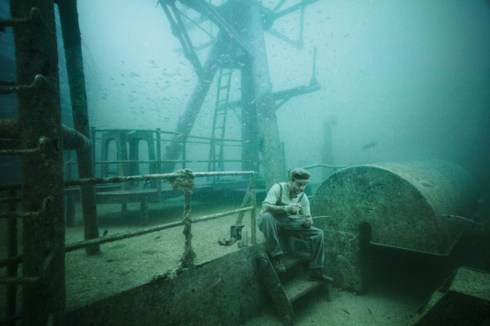
“Austrian photographer andreas franke took a diving expedition down into hulk of the artificial reef general hoyt s. Vandenberg located 100 feet below sealevel, approximately seven miles south of key west. Having documented the trip and the shipwreck site, franke digitally manipulated the images he captured to depict surreal everyday scenes from the past, taking place in the underwater locale.
the series of 12 photographs entitled ‘life below the surface’ can be viewed installed at the location of the sunken ship of which the images take place.
To withstand the more than wet conditions, each piece print is encased between sheets of plexiglas encased by a stainless steel frame whereby a silicon seal helps deter water from entering. the artworks are attached to the ship by strong magnets which offer a damage free removal at the end of the exhibition.
‘Mystified scenes of the past that play in a fictional space. dreamworlds, where you can get lost or you can identify with. This makes new and unexpected atmosphere.’ – andreas franke.




Source:


The Benefits of Bedford Slims Emulates traditional smoking, without combustion and tar.No smell on clothing or breath.Usable almost anywhere – on the train, in restaurants, bars.Battery lasts for approximately 300 “puffs”.Lithium Ion Rechargeable Batteries increase the life4 pleasant flavours: Tobacco, Menthol, Clove and Dark Roast.30-day return guarantee. Try a Bedford Slims Starter System The Vapourette […]

Pencil vs. Camera’ by Ben Heine image © Ben Heine ‘Pencil vs. Camera’ by ivory coast-born brussels-based photographer ben heine is a series of images that inject hand-drawn pictures within real-life settings to create a composite effect that is often surreal and highly narrative. Manipulating the backdrop to host added elements such as real-life tetris blocks,floating […]

The ‘corner store’ bag collection by cast of vices the ‘corner store’ bag collection by LA-based jewelry designers cast of vices offers an upscale interpretation of everyday plastic bags. All pieces in the line are composed of lambskin leather and are hand sewn and hand embossed. their designs, however, are replicas of four plastic bag […]

Over his 40-year career as one of India’s most respected photographers, Raghu Rai has captured his native land in good times and bad, richly depicting the increasing complexity of living in what is now one of the world’s most rapidly developing countries. Equally adept at humorously evoking the day-to-day rituals and activities of Indian life […]









 lovevoll.com