

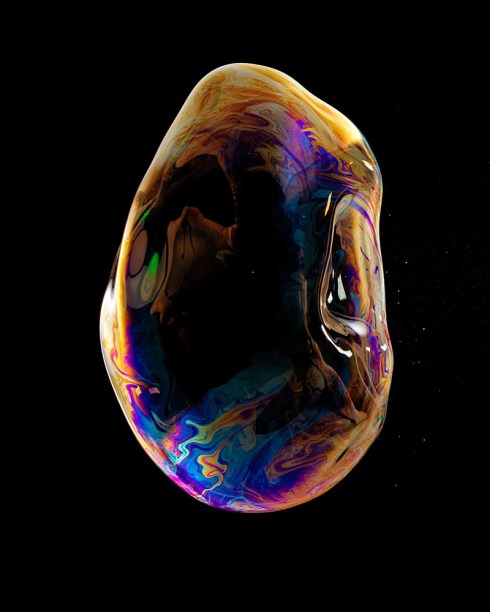
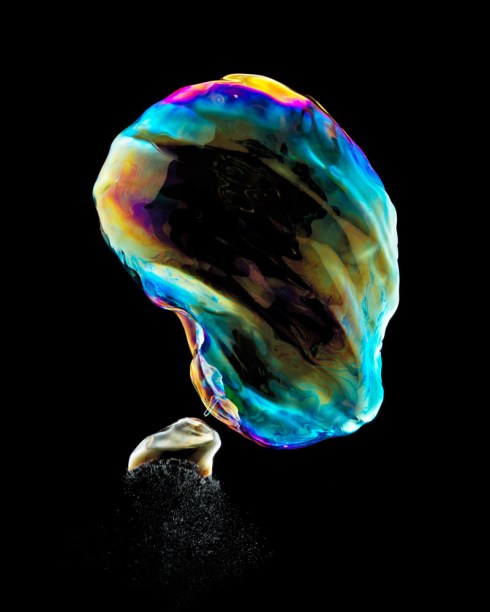
Captured with High Speed Flash Units, the images show soap bubbles in the moment of bursting. In the first few images, you can still see the bubbles intact, few instants after their creation. In the last pictures, you see how the thin film of soap starts to dissapear, leaving behind countless tiny drops of soap water.







Archive | Photography RSS feed for this section






Source:














Bursting Soap Bubbles
20 JulFallen Princesses
9 Jul
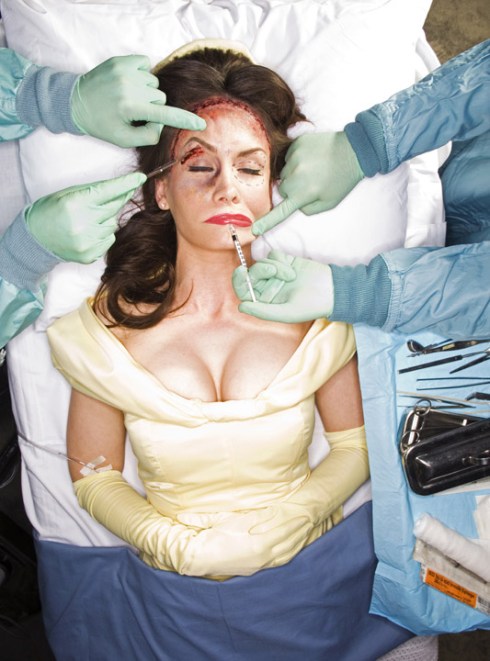
“Fallen Princesses” is a series of photographs by Dina Goldstein, The imagines shows what happened to the Disney Princesses in the real world.





source:
Concept Instaglasses 2012
6 Jul
“Many people use Instagram. They all love the effects, and every one of them loves to take pictures and to share them with their friends. Wouldn’t it be great to capture your everyday life, your entire life, through beautiful filters? The design concept can give the appearance of glasses.
You activate the glasses by pushing “Insta” and option to choose between different filters. Are you enjoying a moment? Just take a picture with your glasses and upload the image straight to Instagram”.


By Markus Gerke
Love Supreme: An Interracial Romance Triumphs in 1960s
12 Jun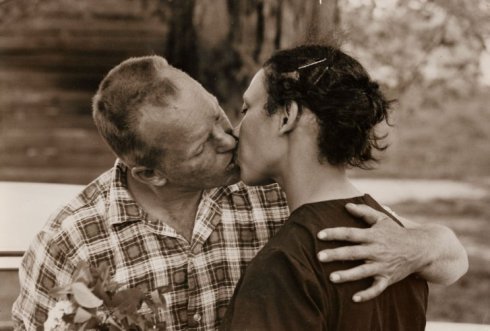
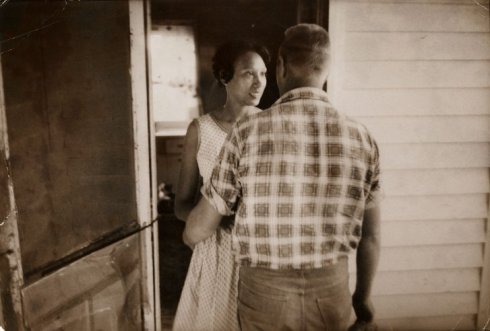
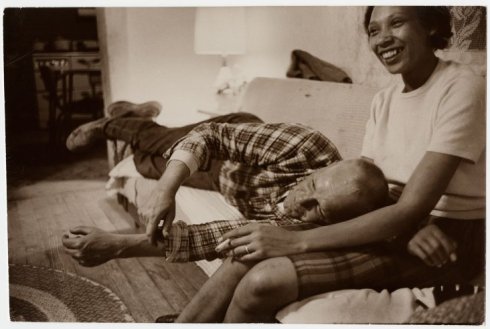
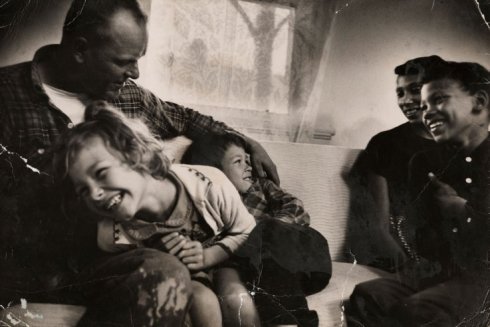
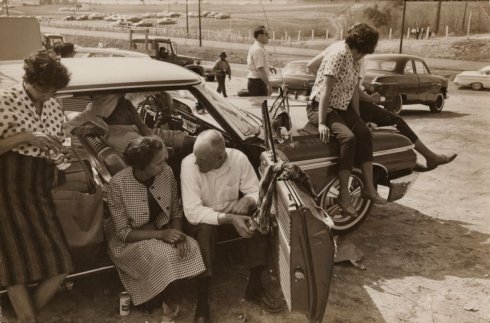
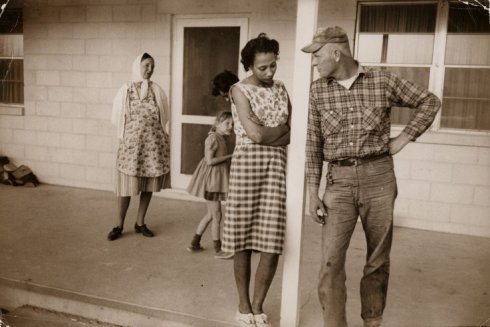
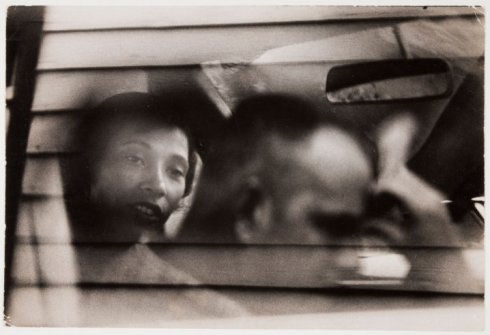
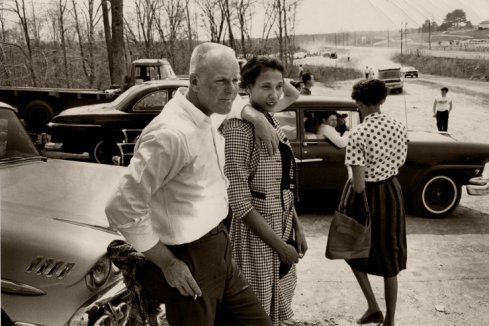
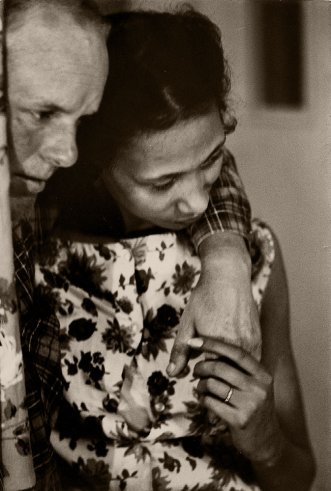
On March 18, 1966, LIFE magazine published a feature under the quietly chilling headline, “The Crime of Being Married.” The article, illustrated with photographs by LIFE’s Grey Villet, told the story of Richard and Mildred Loving, a married interracial couple battling Virginia’s anti-miscegenation laws. Villet’s warm, intimate pictures revealed a close-knit family, including children and grandparents, living their lives in opposition to a patently unjust law — but also captured eloquent moments, gestures and expressions that affirmed just how heavily their defiance weighed on the very private couple.
The LIFE article and Villet’s images, read and viewed today, assume a poignancy and power perhaps unimagined by the magazine’s readers in 1966. The couple, after all, was awaiting an appeal on a court ruling that had, in effect, banished them from their hometown. At the time, the Lovings were adamant (in their own unassuming way) that they had no interest in being cast as Civil Rights heroes. All they wanted was to live their lives and raise their children in peace. But decades later, we know what the people in Villet’s published photographs — a frowning Richard Loving; Mildred Loving, her eyes downcast — might have hoped and prayed for, but could never ultimately count on: namely, that a year later, in 1967, the U.S. Supreme Court finally and unanimously decided the case of Loving v. Virginia, ruling against the state and finding all anti-miscegenation laws across the country unconstitutional.
Here, on the 45th anniversary of the June 12, 1967, Supreme Court decision that, in effect, codified the right of men and women to simply love whom they choose, LIFE.com presents a gallery of recently rediscovered Grey Villet photographs of the Lovings, their family and their friends, along with the text of the original magazine story (below).
“[Text from the original article from LIFE, March 18, 1966]
“The Crime of Being Married”
She is Negro, he is white, and they are married. This puts them in a kind of legal purgatory in their home state of Virginia, which specifically forbids interracial marriage.
Last week Mildred and Richard Loving lost one more round in a seven-year legal battle, when the Virginia Supreme Court upheld the constitutionality of the state’s anti-miscegenation law. Once again they and their three children were faced with the loss of home and livelihood.
Both Lovings were born and raised in the isolated hill country around Caroline County, north of Richmond, where there has always been an easy-going tolerance on the race question. It stirred little fuss when the couple culminated a long and agonized courtship by traveling to Washington, D.C., to get married in 1958. But five weeks later the county sheriff routed them out of bed at 2 a.m. and took them off to jail. A local judge handed down a year’s sentence but suspended it if they agreed to leave the state immediately and stay away for 25 years.
Badly frightened and unaware of their right of appeal, the Lovings lived five years of hand-to-mouth exile in Washington. Even so, they were re-arrested when they returned for a visit to Mildred’s family. Released on bail, they wrote a letter to then-Attorney General Robert Kennedy, asking for help. This led the American Civil Liberties Union to take an interest in their case. The Lovings decided to take up permanent residence in Virginia and fight. Now their case will return to federal court — where Loving v. Virginia may well become the next big landmark in civil rights.
Richard and Mildred’s families have lived in Caroline County for generations. They were friends and neighbors when the two were children, and they still are. In fact, Richard’s mother, a licensed midwife, delivered all three of Mildred’s children.
“It never was like a lot of other places,” Richard explains. “It doesn’t matter to folks around here. They just want to live and be left alone. That’s the way I feel.” A family of simple wants and needs, the Lovings keep largely to themselves. Richard keeps busy as a $5-per-hour construction worker. On weekends he likes to go drag racing in a souped-up car, which he owns with two boyhood friends, both Negroes. The Lovings’ white neighbors have grown accustomed to the marriage, and they encounter hostile stares only when they venture away. “It makes me want to ask them what the hell they are staring at,” he says. “I haven’t yet, but once we are allowed to live here legally, I will.”
Virginia is one of 18 states where marriage between Negroes and white persons are forbidden by law. Judge Leon M. Bazile, who originally sentenced the Lovings, later wrote, “Almighty God created the races white, black, yellow, Malay and red, and He placed them on separate continents, and but for the interference with His arrangement there would be no cause for such marriages.”
The Lovings’ lawyers, Philip Hirschkop and Bernard S. Cohen, will base their appeal on the claim the Virginia’s anti-miscegenation statutes violate the due process and equal protection clauses of the 14th Amendment. The State insists that the 14th Amendment exempts anti-miscegenation statutes from its coverage, and that there is no constitutionally protected right of a free choice of a spouse in marriage. Thus, the first issue the Supreme Court will face, if it takes the case, is whether the constitutional rights of the individual override the state’s right to control marriages under the state’s police powers.
Richard and Mildred Loving realize that their fight will undoubtedly affect the lives of many other people if they win; there are probably a half million mixed marriages in the U.S. at present. But the Lovings do not look upon themselves as champions of civil rights.
“We have thought about other people, but we are not doing it just because somebody had to do it and we wanted to be the ones,” says Richards. “We are doing it for us — because we want to live here.”



Classic portrait faces on modern bodies by Dorothee Golz
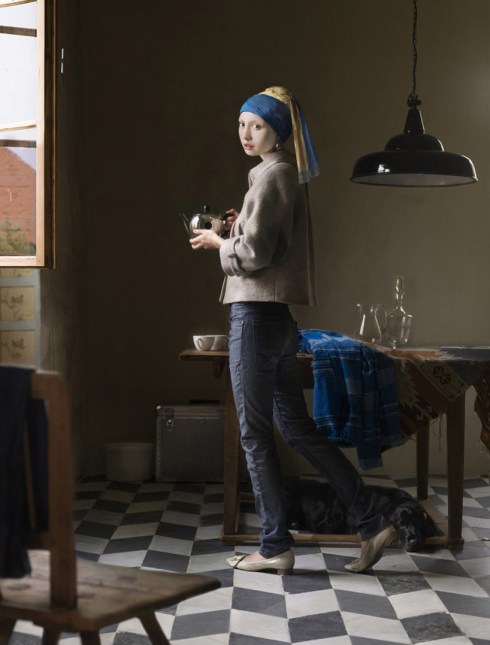
12 Jun‘the pearl earring’ by dorothee golz diasec, c-print, 188 x 140 cm
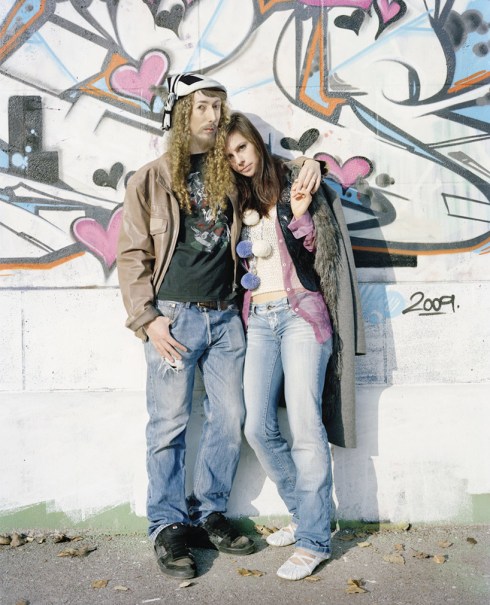
“Vienna-based artist Dorothee Golz has created a digitally painted series in which classic portraits have been reimagined as well-recognized drawn faces visualized on modern bodies. Golz’s portfolio of hybrid pieces are born from her interest in historical artworks, social structure and the conception of gender roles both the renaissance era and today. The artist repurposes elements from the original work, stripping away the intention of the painter while infusing her own modern conception of the figures pictured.
First, the Golz begins by selecting an antiquated painting possessing a photorealistic quality in the vision of the sitter’s face. she then develops a studio setting in which to picture the modern body and renaissance face in a manner which may seamlessly combine both elements in a single still. Through the use of strategic lighting and particular positioning of the body of the sitter, the artist is able to re-envision the original artwork as a modern photographic representation. finally, the artist places the painted sitter’s head upon the digital image picturing the figure of a person from today in post production. In this way, Golz frees the painted renaissance persons from their stiff posture and conservative dress so that their facial expressions may be more recognizable to a contemporary audience”.
‘girl at the window’ diasec, c-print, 110 x 83 cm
‘dürer with girlfriend’ c-print/ diasec 180 x 143 cm
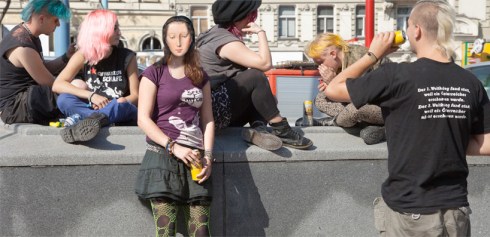
‘punks madonna’
‘anne van cleve’ diasec, c-print, 125 x 95 cm
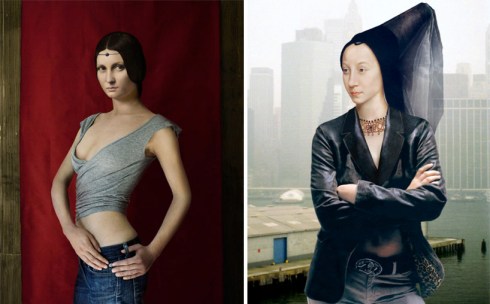
left: ‘la belle ferroniere’, diasec, c-print, 110 x 90 cm
right: ‘steeple-hat -woman’, diasec, 60 x 45 cm
‘the unconcerned’ diasec, c-print, 180 x 140 cm
left: ‘jeans-madonna’, diasec, c-print, 126 x 95 cm
right:’A.D.’, diasec, 85 x 60 cm
‘holbein before cy twombly’
c-print/ rahmen mit schattenfuge 149 x 124 cm ca. 145x 120 cm c-print / framed
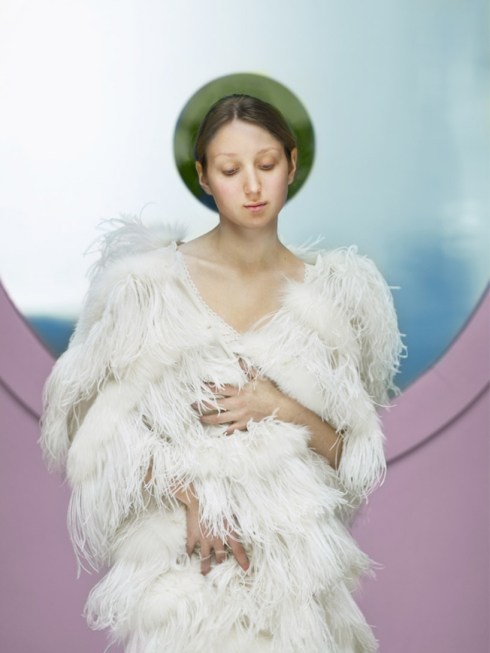
‘madonna mit den weißen federn’
c-print/ diasec 130 x 98cm
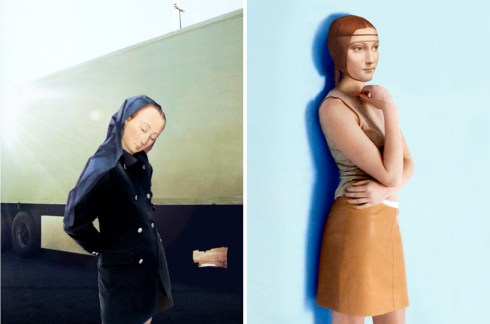
left: ‘maria with blue coat’, diasec, 60 x 45 cm
right: ‘cecilia’ c-print/ diasec 60 x 45 cm
‘maria with the ginger hairs’
c-print/ diasec 60 x 45 cm
Source:







Philip Karlberg Pin Art
15 MayJackie O wearing burberry sunglasses from ‘pin art’ by philip karlberg, 2012
all images courtesy the artist
“Philip Karlberg. the artist has painstakingly arranged over a thousand wooden pegs on several boards complemented by strategic lighting in order to hint at the faces of well known public figures wearing sunglasses typical to their dress in his new series ‘pin art’. each of the peg-in-hole pieces pictures the likeliness of several famous faces including karl lagerfeldt, john belushi, Jackie O, Johnny Depp, Lady Gaga, and Steve Mcqueen wearing contemporary frames upon their wooden visage for plaza magazine. the artist says of his time-intensive project, ‘it was a real challenge to sculpt the faces of some classic wearers of sunglasses. it took me six days to shoot the six faces and around 1,200 sticks were used’
Johnny Depp in armani sunglasses
left: steve mcqueen in persol sunglasses
right: lady gaga in yves saint laurent sunglasses
left: karl lagerfeldt in dior homme sunglasses
right: john belushi in ray ban sunglasses


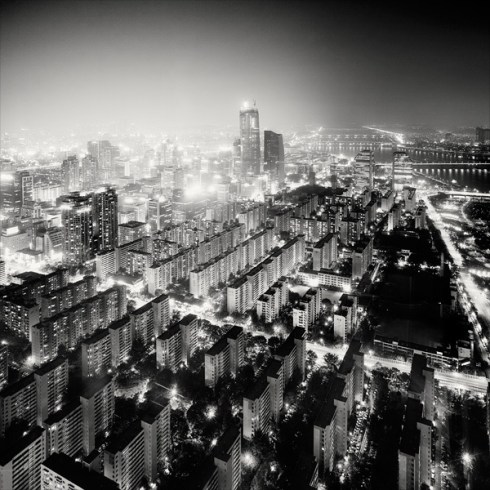
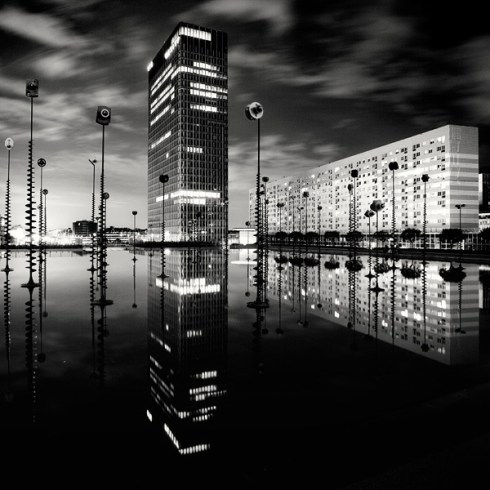
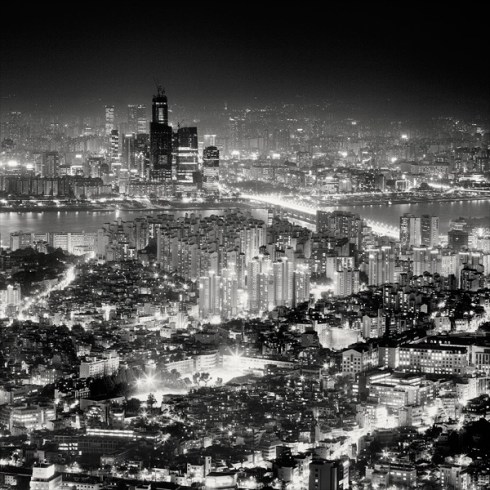
Martin Stavars: Nightscapes
2 MaySouth Korea
Shanghai, China, 2010
Singapore
Dubi
Hong Kong, 2009
Paris, France, 2010
Chongqing, China, 2012
Tokyo, Japan, 2010
Toronto, Canada, 2011
Seoul, South Korea, 2011
Busan, South Korea
Chongqing, China, 2012
Hong Kong, 2009
Paris, France, 2010
Istanbul, Turkey, 2011
Shop Room 305

Featured
-

-

Bedford Slims Electronic Cigarettes
The Benefits of Bedford Slims Emulates traditional smoking, without combustion and tar.No smell on clothing or breath.Usable almost anywhere – on the train, in restaurants, bars.Battery lasts for approximately 300 “puffs”.Lithium Ion Rechargeable Batteries increase the life4 pleasant flavours: Tobacco, Menthol, Clove and Dark Roast.30-day return guarantee. Try a Bedford Slims Starter System The Vapourette […]
-

Pencil vs. Camera
Pencil vs. Camera’ by Ben Heine image © Ben Heine ‘Pencil vs. Camera’ by ivory coast-born brussels-based photographer ben heine is a series of images that inject hand-drawn pictures within real-life settings to create a composite effect that is often surreal and highly narrative. Manipulating the backdrop to host added elements such as real-life tetris blocks,floating […]
-

Have a nice day! :)
The ‘corner store’ bag collection by cast of vices the ‘corner store’ bag collection by LA-based jewelry designers cast of vices offers an upscale interpretation of everyday plastic bags. All pieces in the line are composed of lambskin leather and are hand sewn and hand embossed. their designs, however, are replicas of four plastic bag […]
-

Photographic Master -Raghu Rai
Over his 40-year career as one of India’s most respected photographers, Raghu Rai has captured his native land in good times and bad, richly depicting the increasing complexity of living in what is now one of the world’s most rapidly developing countries. Equally adept at humorously evoking the day-to-day rituals and activities of Indian life […]
 lovevoll.com