





SOURCE:

– FREELANCE LONDON BASED SCULPTOR / ILLUSTRATOR – All work featured © 2012
Clients include: Coca Cola / Penfield USA / Slam City Skates / Emerica / Pointer Footwear / Brutus / Jaguar Shoes / Urban Outfitters + more
__contact – _arrangregory@gmail.com
www.arrangregory.com


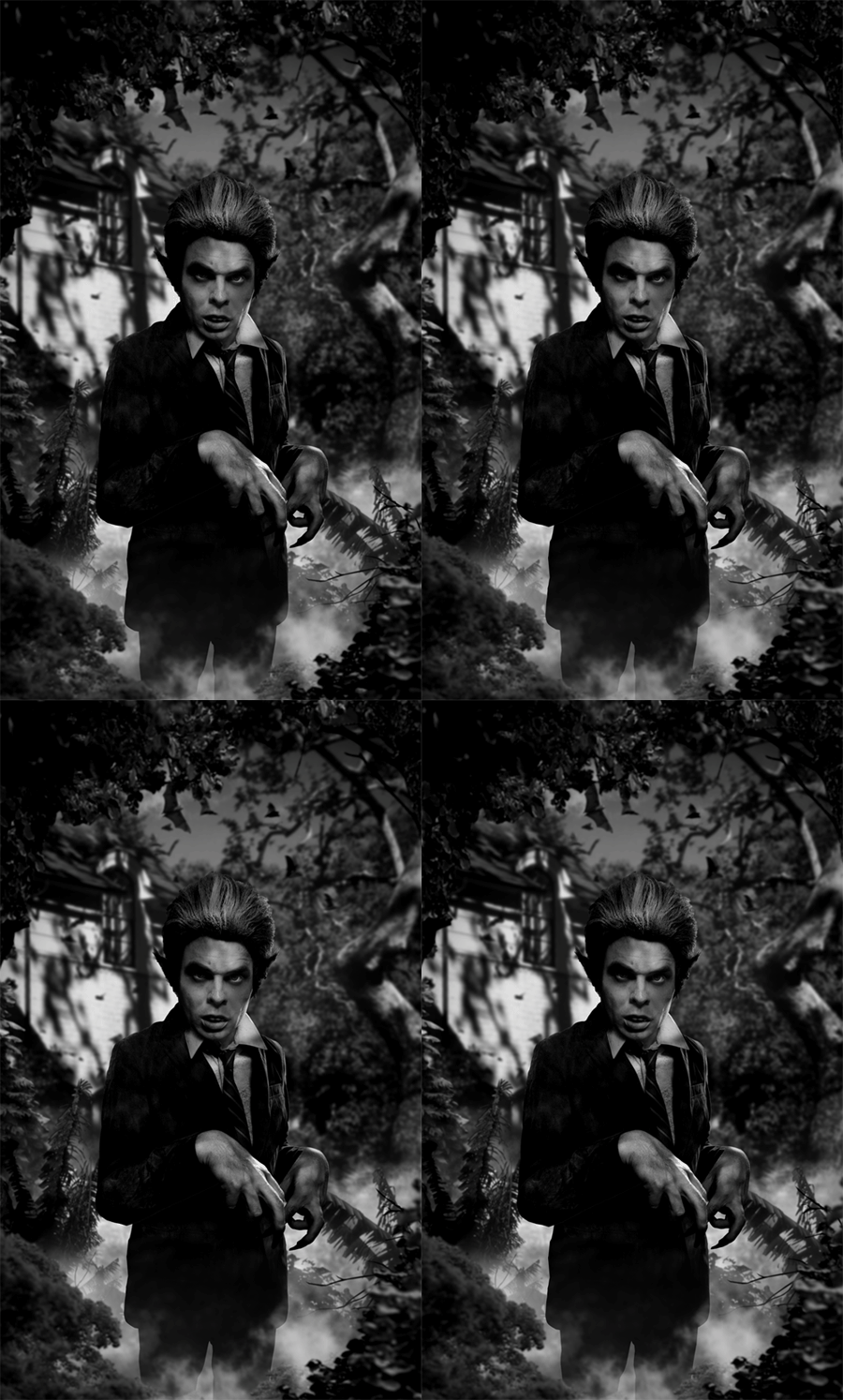
“Brooklyn-based studio the Saline Project have diverted their talent for creating music videos, and applied it to GIF art in their image series entitled ‘monsters, villains, heroes and victims’ (MVHV). brothers adam and ben toht along with jesse roff and Liam Kirtley make up the collective who will showcase up to thirteen pieces, all of which broaden the traditional computerized GIF art-form from a basic animated visual to one that also illustrates depth and volume.
This technique has been dubbed ‘3D lenticular imagery’ and was achieved through photographing the scenes in a studio, and then reproduced into a type of photo collage, cut up in a particular way to give the illusion of dimension.
The team, who have in the past created music videos for the likes of modest mouse and the cure describe the serendipitous process behind the concept:
‘We do a lot of fooling around and experimentation, and MVHV came out of one of those experiments, really it’s a mash-up of a bunch of things that we love dearly. we’ve always been drawn to dark, iconic characters and the look and feel of film noir.’ The remainder of the images are aimed to be released coinciding with halloween, given the spooky subjects, with a show in new york, then published online from which they will make an ‘art app’, so viewers can see them on phones and ipads”.


SOURCE:

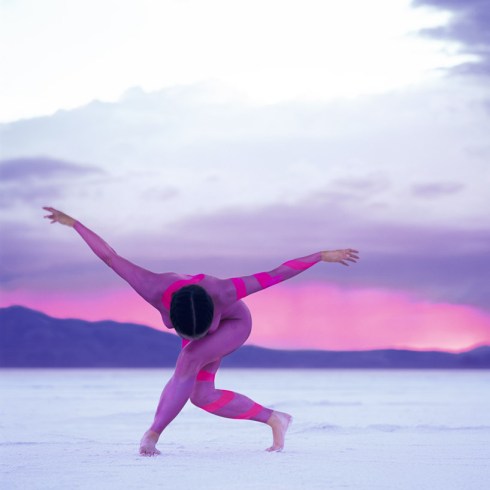
“California-based photographer Jean-Paul Bourdier has sent designboom images of his collection of photographs entitled ‘bodyscapes’, of which he is gathering funding for a book of 240 works titled ‘leap into the blue’ in a kickstarter campaign you can find here. Bourdier concentrates on the beauty and geometry of the human body, combining landscape and flesh as a canvas to create a visual union, with all of the images having been shot on site in analog photography, without the use of digital manipulation. He explains his understanding, motivation and expression of the human form behind his compositions:
‘Arising in each visual event conceived are the geometries generated by the body as a determinant of ‘negative space’— not the background of the figure and the field surrounding it, but the space that makes composition and framing possible in photography. As an organizer of space, the body also serves as a primary measuring unit, by which one perceives and constructs one’s environment.
such an approach can be linked to the practices of literally using the body as a first unit of measurement, which were not only common to the building of vernacular architecture around the world but were also at work in the temples of India, Egypt and Greece, for example.’
Intersecting many disciplines – photography, sculpture, performance, dance, land art, body art, design and acrobatics – the artist creates and choreographs each vibrant piece with a strong philosophy directing each scene, using the medium of photography, known to capture the ‘real’, to achieve the seemingly impossible, with thoughtful and surreal outcomes:
‘In working with the bare and painted body, I am also working with the demands and challenges of a body-mind state that I call ‘not two—many twos’. For example, without clothes the body regains its undivided primary nature, being intricately part of the forces of the universe. One and many. the visual works I come up with are thus a continual experiment of how we physically, rhythmically relate to this universe from the specific, intimate bodyhouse.’
‘Rather than being a mere recording of an encounter between event and photographer, the photograph is an event of its own: long prepared, and yet full of unexpected moments; a still manifestation of an encounter between desert light, body light and camera eye.’ The ‘bodyscapes’ project, to now be documented in a publication, establishes a clear and unadulterated reverence to something shared by all, creating corporeal experiences that extend beyond to that of the natural cosmos and defining the sometimes forgotten innate relationship with the two.



“Many people use Instagram. They all love the effects, and every one of them loves to take pictures and to share them with their friends. Wouldn’t it be great to capture your everyday life, your entire life, through beautiful filters? The design concept can give the appearance of glasses.
You activate the glasses by pushing “Insta” and option to choose between different filters. Are you enjoying a moment? Just take a picture with your glasses and upload the image straight to Instagram”.


By Markus Gerke
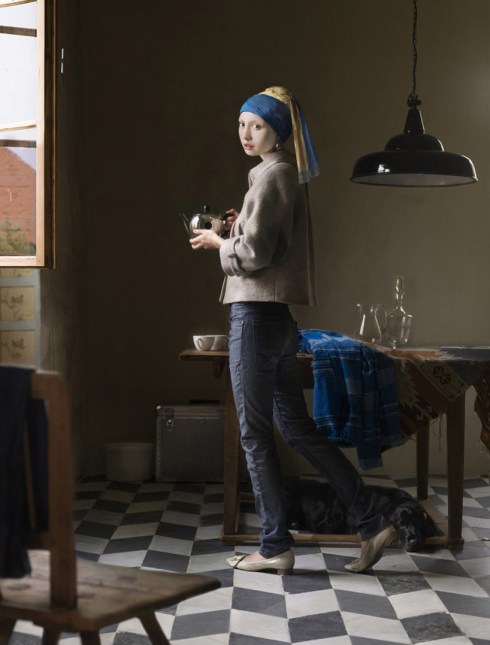
‘the pearl earring’ by dorothee golz diasec, c-print, 188 x 140 cm
“Vienna-based artist Dorothee Golz has created a digitally painted series in which classic portraits have been reimagined as well-recognized drawn faces visualized on modern bodies. Golz’s portfolio of hybrid pieces are born from her interest in historical artworks, social structure and the conception of gender roles both the renaissance era and today. The artist repurposes elements from the original work, stripping away the intention of the painter while infusing her own modern conception of the figures pictured.
First, the Golz begins by selecting an antiquated painting possessing a photorealistic quality in the vision of the sitter’s face. she then develops a studio setting in which to picture the modern body and renaissance face in a manner which may seamlessly combine both elements in a single still. Through the use of strategic lighting and particular positioning of the body of the sitter, the artist is able to re-envision the original artwork as a modern photographic representation. finally, the artist places the painted sitter’s head upon the digital image picturing the figure of a person from today in post production. In this way, Golz frees the painted renaissance persons from their stiff posture and conservative dress so that their facial expressions may be more recognizable to a contemporary audience”.
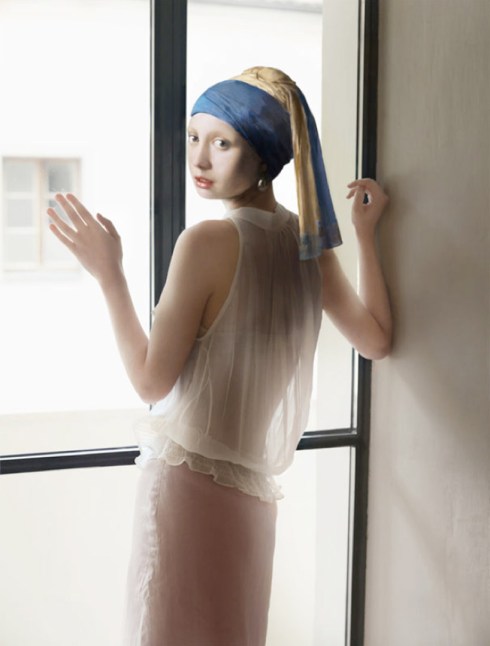
‘girl at the window’ diasec, c-print, 110 x 83 cm
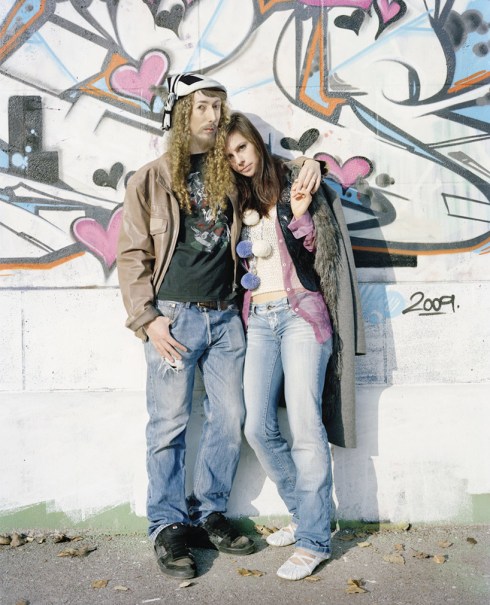
‘dürer with girlfriend’ c-print/ diasec 180 x 143 cm
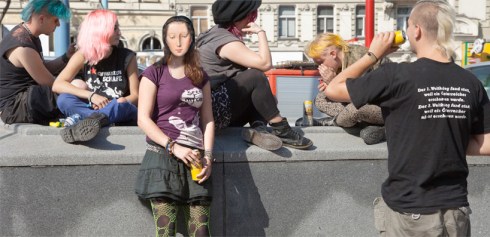
‘punks madonna’

‘anne van cleve’ diasec, c-print, 125 x 95 cm
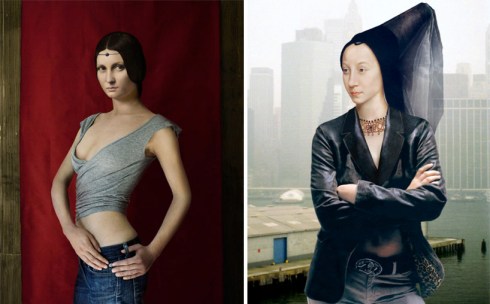
left: ‘la belle ferroniere’, diasec, c-print, 110 x 90 cm
right: ‘steeple-hat -woman’, diasec, 60 x 45 cm
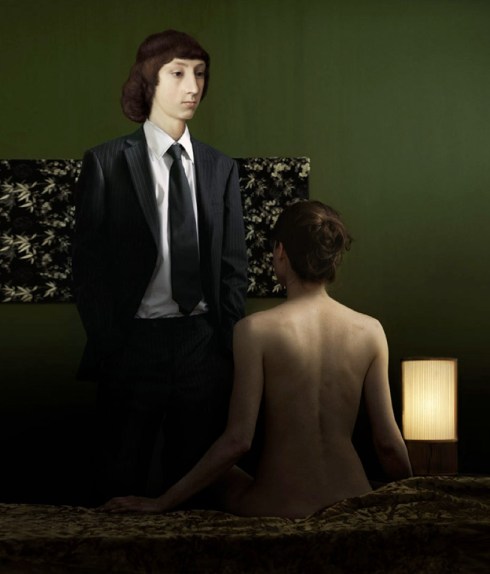
‘the unconcerned’ diasec, c-print, 180 x 140 cm

left: ‘jeans-madonna’, diasec, c-print, 126 x 95 cm
right:’A.D.’, diasec, 85 x 60 cm

‘holbein before cy twombly’
c-print/ rahmen mit schattenfuge 149 x 124 cm ca. 145x 120 cm c-print / framed
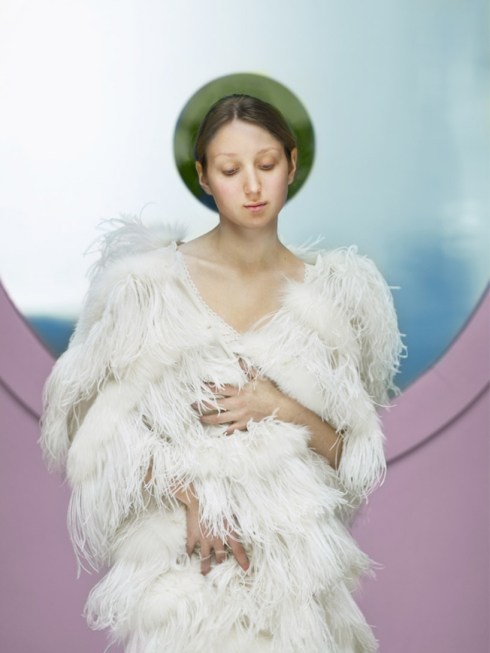
‘madonna mit den weißen federn’
c-print/ diasec 130 x 98cm
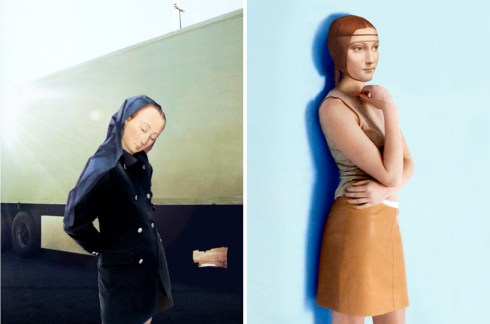
left: ‘maria with blue coat’, diasec, 60 x 45 cm
right: ‘cecilia’ c-print/ diasec 60 x 45 cm
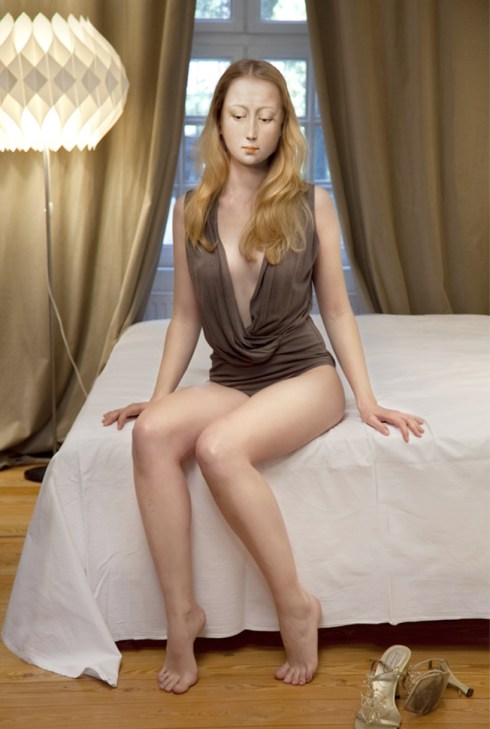
‘maria with the ginger hairs’
c-print/ diasec 60 x 45 cm
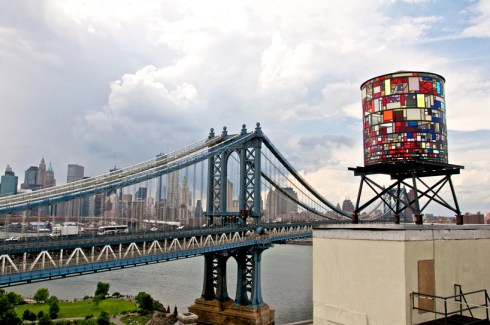
‘watertower’ by tom fruin, 2012
found plexiglas, steel, bolts
25 x 10 x 10 feet
images by robert banat courtesy the artist
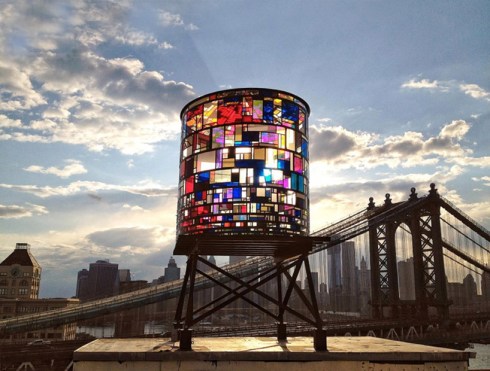
picturing the piece at the sun plays over its surface
Tom fruin has unveiled his newest kaleidoscopic structural installation ‘watertower’ as the premiere work completed in the united states for his series ‘icon‘. the brooklyn artist has built a 25 by 10 foot tall water tank formed from nearly 1,000 colorful salvaged plexiglass pieces gathered from all over NYC. the work has been constructed atop building 20 jay street, near the east river waterfront in brooklyn. The glittering sculpture is illuminated by natural light during the day, while from sunset to sunrise an ardunio-controlled light show, designed by Ryan Holsopple, is conducted inside the work. ‘watertower’ is visible to any person with a clear view of the dumbo, brooklyn, NYC skyline. the illuminated, colored glass work will be on show from june 7th, 2012, remaining on exhibition until the following june.
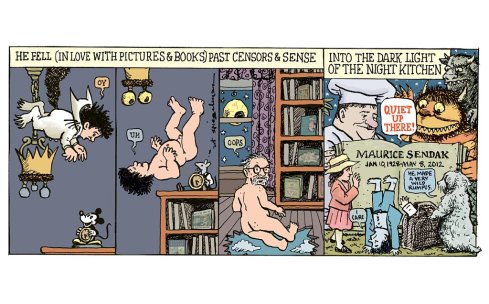
ART SPIEGELMAN
So, Maurice: Wish you could’ve been here for the outpouring of deserved affection that coursed through the media when you split. If there’s anything to this posterity thing, you’re with us through your work as fully as Laurel and Hardy or your beloved Mozart … so why do I miss you so?
The author, most recently, of “MetaMaus.” A traveling retrospective of his work, “Co-Mix,” is at the Pompidou Center in Paris until May 21.

TOMI UNGERER
For Maurice: I visited Maurice last summer. It was joy and bliss under the pine trees. Cajoling the past and blasting the present — both roaring, eyes weepy, giving our emotions a free range of expressions. Maurice is now where the wild things are. Ursula Nordstrom, our editor, Edward Gorey, Shel Silverstein and many others are already there, now celebrating his arrival with a big-bang-binge among the restless natives. Feasting on taboos and dancing the mumbo-jumbo under the No No trees. His departure is an invitation! See you later perkolator!
A French-born artist whose books include “The Three Robbers.”
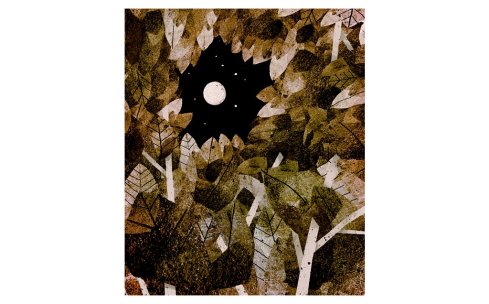
JON KLASSEN
Maurice Sendak’s books were always a bit scary, but the pictures were so controlled that you were kind of reassured. There’d be these really dense bushes with God-knows-what behind them and it was terrifying, but then there’d be a moon, all nicely framed in a hole in the scenery, as if it knew exactly where you were standing and had gotten into position for you, and it wasn’t as scary then.
A Los Angeles-based illustrator whose forthcoming book is “This Is Not My Hat.”
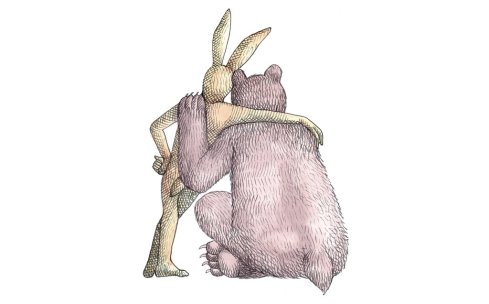
GEOFF McFETRIDGE
My first exposure to Maurice Sendak was as a child reading “Where the Wild Things Are.” From the first time I saw it I was floored. It was a book about something I loved; it was a book about drawing! For many years it was the high point to aim for when it came to things like hands, feet, claws, crosshatching and bloodshot eyeballs. There was one small thing that Maurice once said in an interview that left a big impression on me. He said that when he started illustrating books, he really could not draw. I am not sure if he was really hard on himself. I get the impression he was. There is something in his drawings that alludes to this angst. Something unsettling. Maurice did not settle for fantastic, he was aiming for something much higher, and deeper.
An artist with a show in London in September at Ivory & Black.

MARC ROSENTHAL
I have always loved Maurice Sendak’s pictures of children in Ruth Krauss’s book “A Hole Is to Dig.” The simple ink drawings are elegant and expressive and amazingly full of character. They helped me learn how to draw kids. Lately, I have learned these even more important things from him: It’s O.K. to break rules. It’s O.K. to be bad. Have the courage not to pull your punches.
An illustrator whose latest book, with his wife, Eileen Rosenthal, is “I’ll Save You Bobo.”
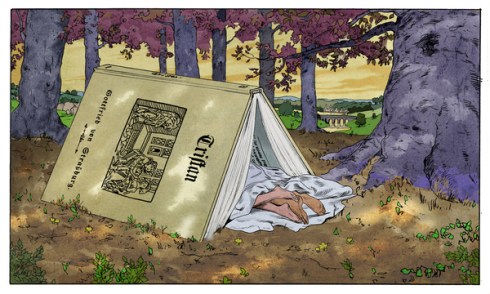
“Illustrations commissioned by NOWNESS, an arts and culture website. The website description of this project reads as follows: Book publisher Angelika Taschen’s favorite novels––and where she read them––are wittily illustrated in this retro comic book-inspired series by artist Joe McKendry. The daughter of bookshop owners, Taschen (née Herbert) grew up surrounded by reading matter and famous German authors, such as Siegfried Lenz and Sarah Kirsch, who would regularly visit her parents’ store in Bonn. “I always knew my life would never be boring as long as there were books around to read and inspire me,” she says. Last year she established Angelika Publishers in Berlin after 23 years of working with her ex-husband Benedict Taschen’s eponymous publishing company, where she helped define the current popularity of coffee table art and design books. Angelika Publishers has so far released two titles––On Perfume Making by Frédéric Malle and Anna Bauer’sBackstage––but Taschen is not rushing to put out the next. “I have to really believe in a book,” she explains. “The subject must be special and it must be very well done conceptually.” Here the bibliophile talks us through the books and places that have colored her life so far.”
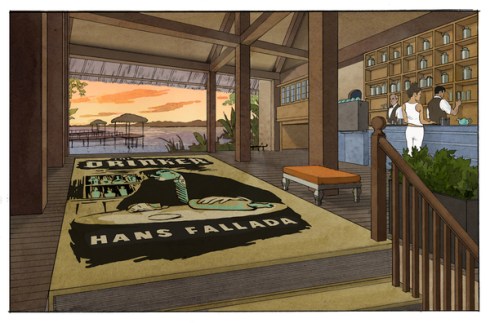
Hans Fallada’s The Drinker; Ayurvedic resort, Sri Lanka
I loved being by the ocean and living this super healthy life, not drinking alcohol and only eating vegetarian food. This very sad book is about an alcoholic man who had a nice marriage, a good business, but he destroyed everything by drinking. He takes out his guilt on his wife and becomes aggressive. Probably this was the only moment, at a health resort, where I could read such a hard book. He ends up in the psychiatric hospital, and I was at this luxury retreat.


The Benefits of Bedford Slims Emulates traditional smoking, without combustion and tar.No smell on clothing or breath.Usable almost anywhere – on the train, in restaurants, bars.Battery lasts for approximately 300 “puffs”.Lithium Ion Rechargeable Batteries increase the life4 pleasant flavours: Tobacco, Menthol, Clove and Dark Roast.30-day return guarantee. Try a Bedford Slims Starter System The Vapourette […]

Pencil vs. Camera’ by Ben Heine image © Ben Heine ‘Pencil vs. Camera’ by ivory coast-born brussels-based photographer ben heine is a series of images that inject hand-drawn pictures within real-life settings to create a composite effect that is often surreal and highly narrative. Manipulating the backdrop to host added elements such as real-life tetris blocks,floating […]

The ‘corner store’ bag collection by cast of vices the ‘corner store’ bag collection by LA-based jewelry designers cast of vices offers an upscale interpretation of everyday plastic bags. All pieces in the line are composed of lambskin leather and are hand sewn and hand embossed. their designs, however, are replicas of four plastic bag […]

Over his 40-year career as one of India’s most respected photographers, Raghu Rai has captured his native land in good times and bad, richly depicting the increasing complexity of living in what is now one of the world’s most rapidly developing countries. Equally adept at humorously evoking the day-to-day rituals and activities of Indian life […]






 lovevoll.com